One fallopian tube removed, a caesarean scar niche, intrauterine adhesions and several failed transfers… Facing all of these challenges, 39-year-old Ms. C (pseudonym) came to OFC Rama 3 Fertility Center in Thailand hoping for a third child. Backed by an advanced embryology lab and an integrated China–Thailand care pathway, 8 blastocysts were tested and 4 healthy embryos were identified. She travelled to Thailand for the transfer in early October and received her positive result on the 22nd — new hope for older patients with complex histories!
01 Three failed transfers — she almost gave up
On the IVF journey, the hardest part is often not a lack of embryos but the disappointment after each transfer. Ms. C first conceived naturally in 2009 but needed emergency surgery for a ruptured corpus luteum cyst. In 2014 she conceived with ovulation induction and timed intercourse and delivered a son at full term.
In 2022 she turned to IVF after an ectopic pregnancy in her right fallopian tube. The first transfer in August ended in a biochemical pregnancy; the second in October was another ectopic pregnancy, requiring removal of the right tube; the third in November did not result in pregnancy.
02 After the storm — new hurdles on the road to baby number three
In August 2024 her fourth transfer at another hospital succeeded, and she delivered a healthy baby by caesarean section the following year. Once she had recovered and was cleared by her doctors, the couple decided to try for a third child — and looked to Thailand.
After careful research she chose an integrated model linking a specialist clinic in China with OFC Rama 3 in Thailand: fertility assessment and hormonal preparation at home, data shared online so Chinese and Thai specialists could plan ahead, and travel to Thailand only for egg retrieval and transfer — with stays as short as 3 days. Pregnancy support and monitoring after the transfer were handled back home.
03 Three challenges at once — the lab makes the difference
In 2025 Ms. C consulted Dr. Yang Yanqing, an IVF specialist in tailored ovarian stimulation. A 3D ultrasound revealed three problems: a caesarean scar niche affecting the implantation environment, an arcuate uterus raising the risk of miscarriage, and intrauterine adhesions with endometrial damage after repeated procedures.
After an online joint consultation between Dr. Yang and Dr. Nuchada of OFC Rama 3, the team decided to treat these issues first before starting a cycle.
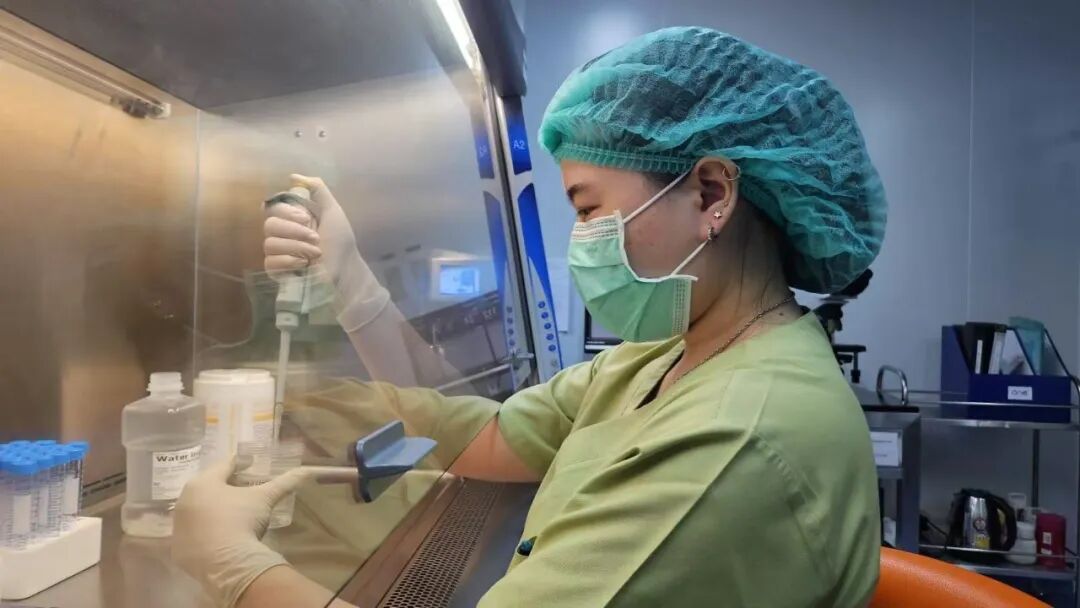
She then began stimulation; with medication and follicle monitoring her follicles matured, and she travelled to Thailand for egg retrieval on 29 December 2025. Given her age, the team used PGT-A (preimplantation genetic testing for aneuploidy) to screen the blastocysts and reduce the risk of miscarriage, pregnancy loss and ectopic pregnancy caused by embryo problems. The Rama 3 embryology team sent 8 blastocysts for PGT-A: 4 were chromosomally normal — a 50% euploidy rate.
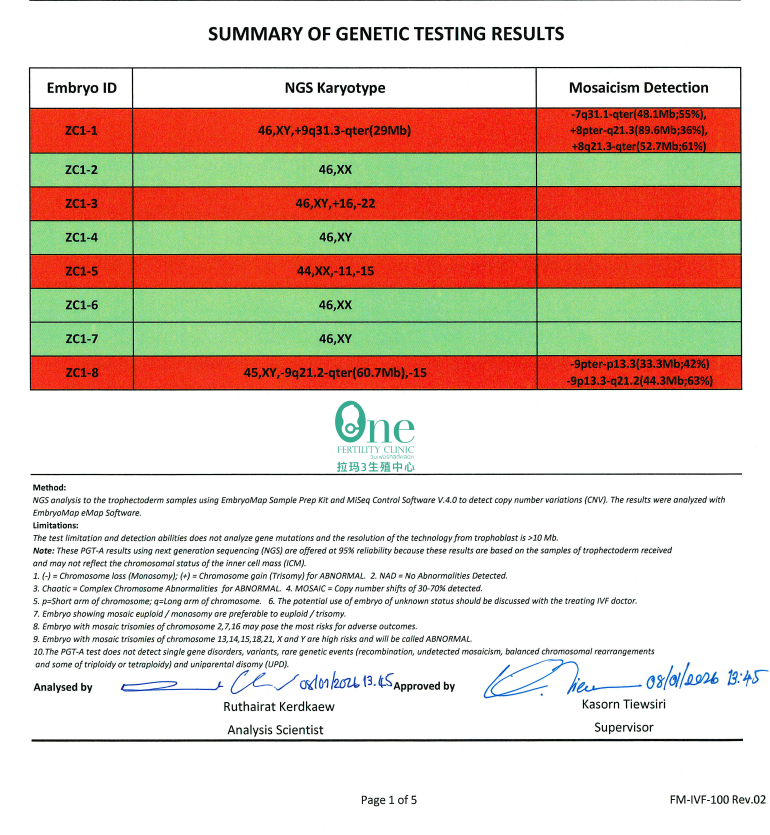
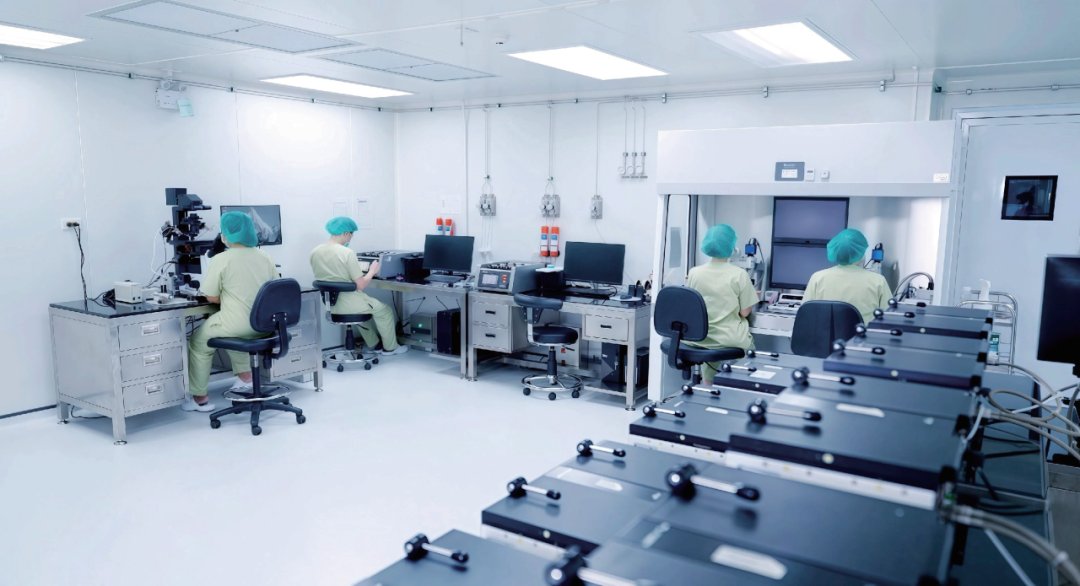
That is a good result for a woman of advanced maternal age. According to ESHRE research, the embryo aneuploidy rate for women over 40 can reach 67%. The OFC Rama 3 lab uses time-lapse culture, MACS sperm selection, IVM and other techniques that help improve blastocyst culture and screening quality.
04 A positive test — the good news arrives
A healthy embryo also needs a receptive endometrium. For the scar niche and adhesions, the team designed an individualised uterine preparation plan, with frequent ultrasound and hormone monitoring during the transfer cycle to fine-tune the lining and medication. The team in China handled preparation and follow-up, the Thai team led the lab work and clinical plan, and information was shared in real time to minimise cross-border travel.
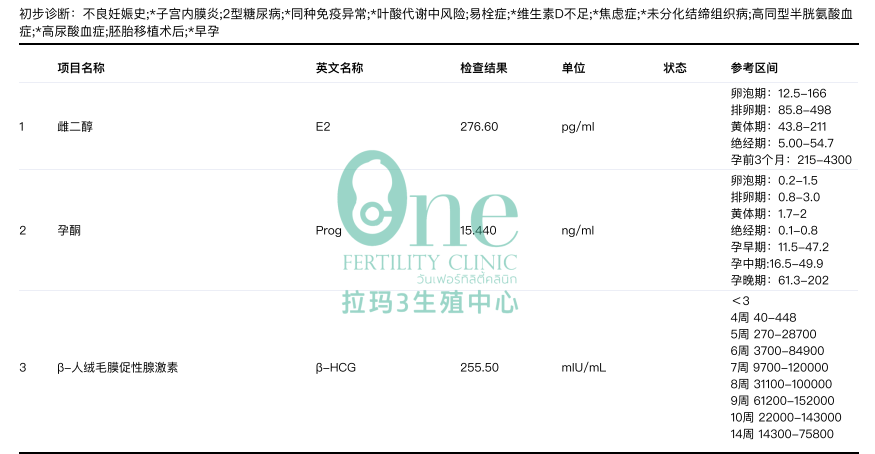
On 22 October 2026, 14 days after transfer, Ms. C's blood test confirmed an early pregnancy. Congratulations to Ms. C on her third baby!
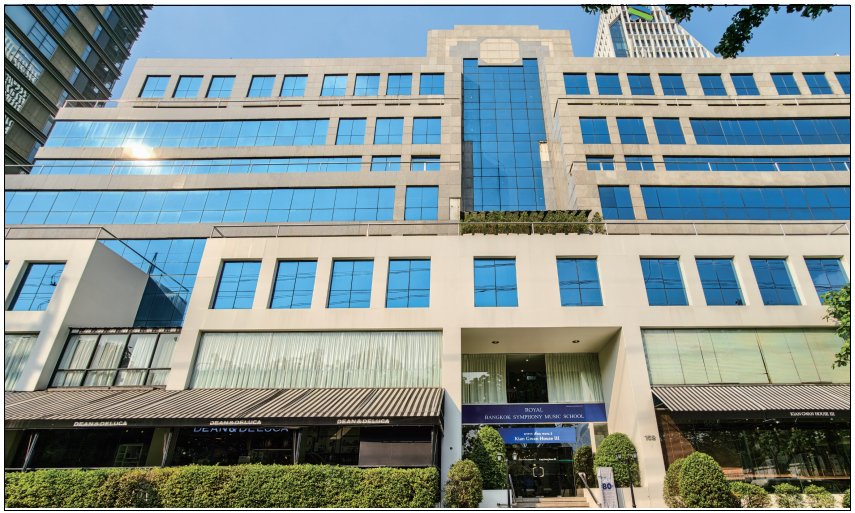
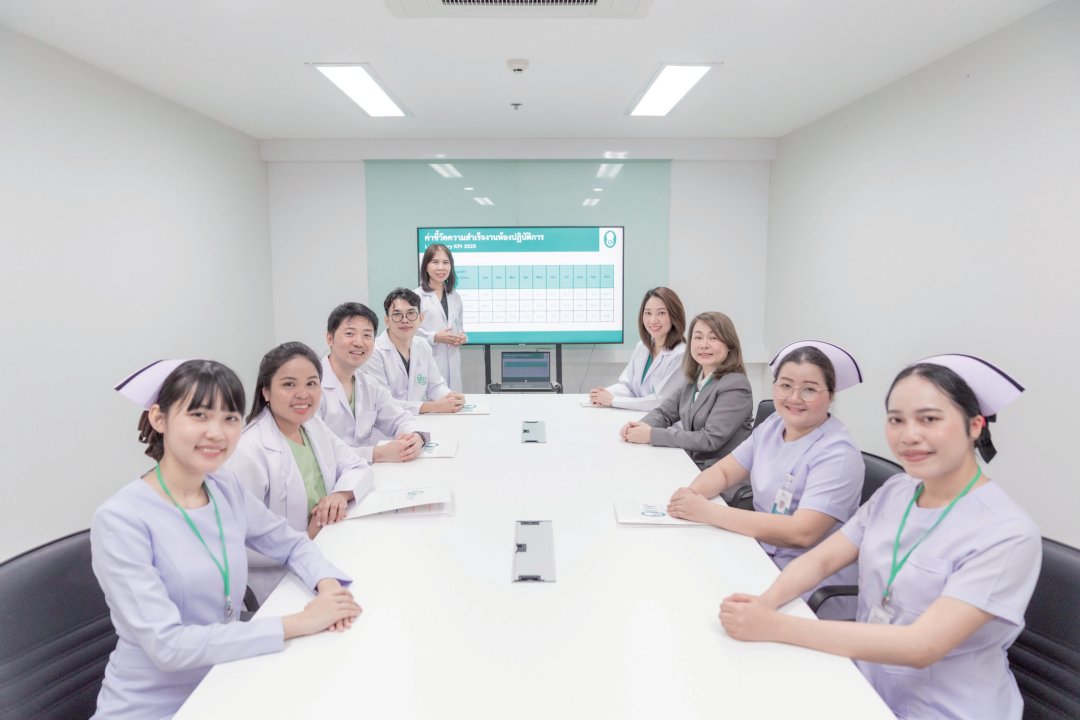
OFC Rama 3 is located in central Bangkok, with a world-class embryology laboratory equipped with time-lapse incubation, PICSI dishes, MACS sperm selection, IVM and other advanced technology. Its integrated China–Thailand service covers preparation at home, embryo culture in Thailand and pregnancy care back home — a single trip to Thailand can take as little as 3 days.
Patient feedback: “The Thai lab really is excellent.” “The lab delivered.” “Came to Thailand and got my good news.”
⚠️ This case describes the treatment of an individual patient. Outcomes of assisted reproductive treatment depend on many factors and vary between individuals; nothing here is a promise, express or implied, of any success rate.